
Canadian Eskimo Dog
Kanadský eskymácký pes





Key facts
| FCI group | 5. Spitz and primitive types |
|---|---|
| Country of origin | Canada |
| Category | Large |
| Weight | 18–40 kg |
Recognition features
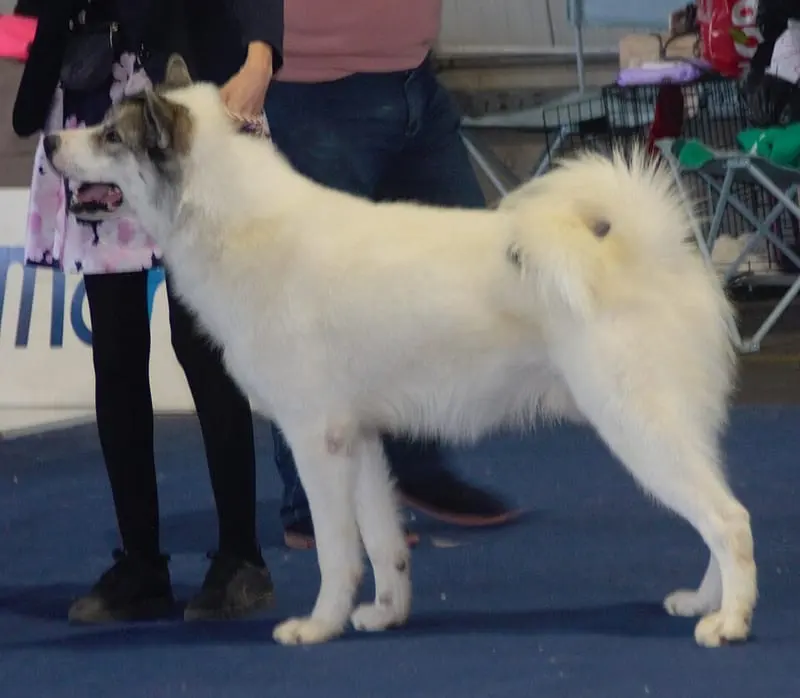
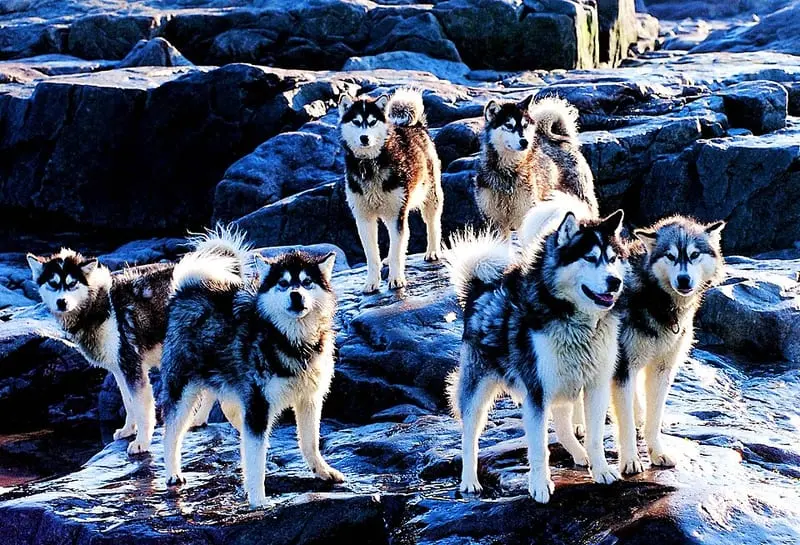
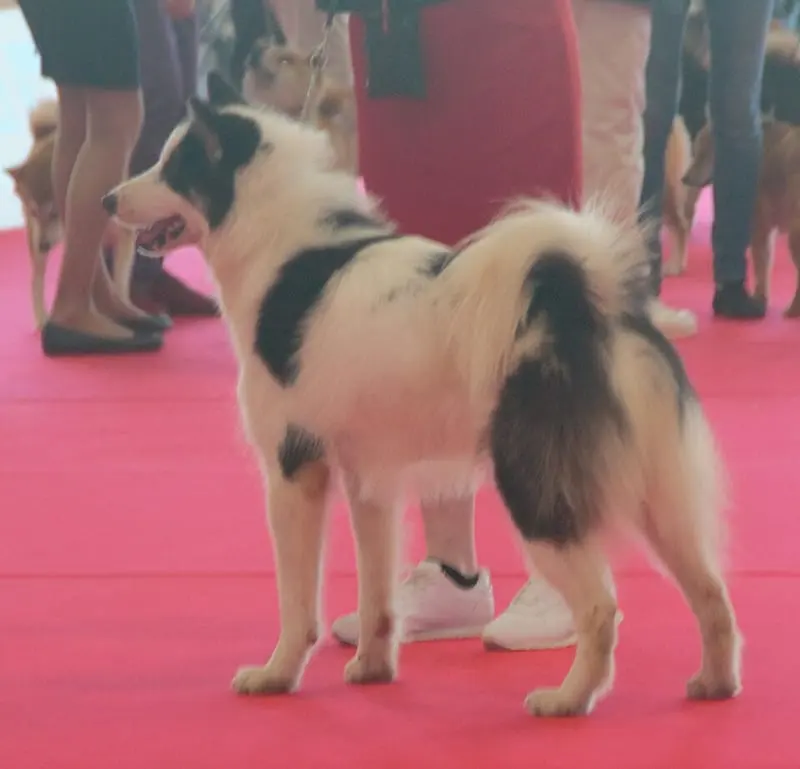
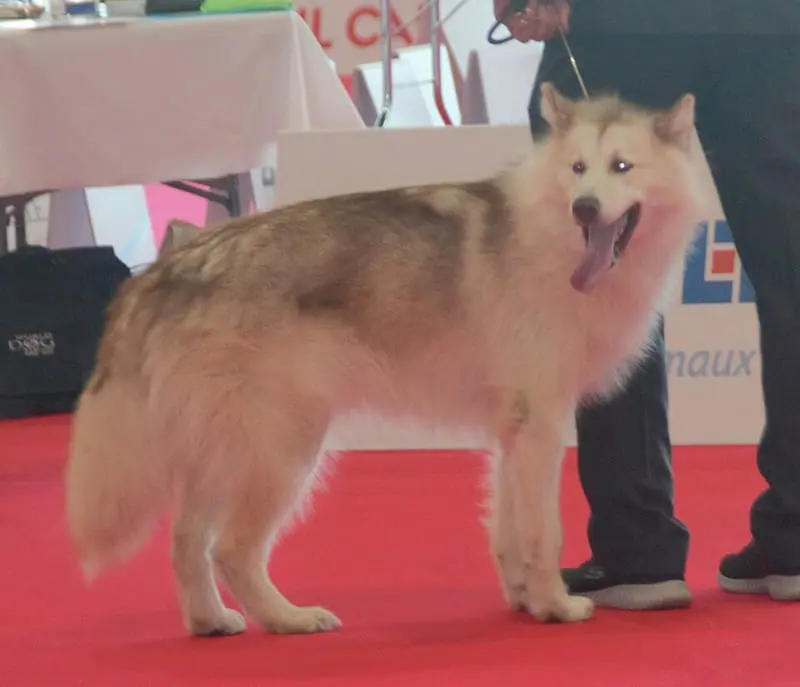
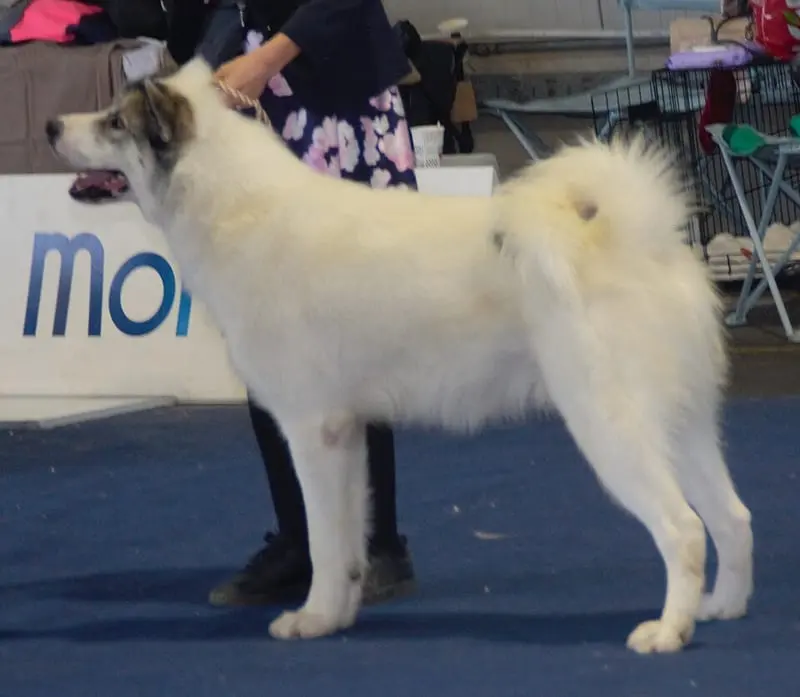
- Powerfully built, moderately sized spitz with wedge-shaped head and thick erect ears
- Dense double coat with a mane on males; no single colour dominates
- Large bushy tail carried up or curled over the back
Purpose
Inuit draught dog: pulled sledges, located seal breathing holes, held musk ox and polar bear at bay, and carried packs in summer.
History
The breed has been bound up with the Thule Inuit culture for 1,100 to 2,000 years in what is now Arctic Canada. Today's stock derives from the remnant population kept by the Inuit of the Boothia and Melville peninsulas and Baffin Island, rebuilt by the Eskimo Dog Research Foundation. It is a primitive, primarily carnivorous breed.
Coat
Thick, dense coat with stiff guard hairs 7–15 cm long over a very dense undercoat; annual moult. No one colour dominates (white, red, black, grey and others).
Similar breeds
Learn to recognise this breed and many more
In the Dogtice quiz you practise breeds on photos and see the differences between look-alike breeds.
The information is indicative. Texts are based on available sources and may contain inaccuracies; for binding details (e.g. for breeding or shows) use the official breed standard. Report a photo or rights.