
Comparison: Clumber Spaniel and Field Spaniel
Clumber Spaniel and Field Spaniel are marked as similar in our database. The table compares only the data we have on the breeds.
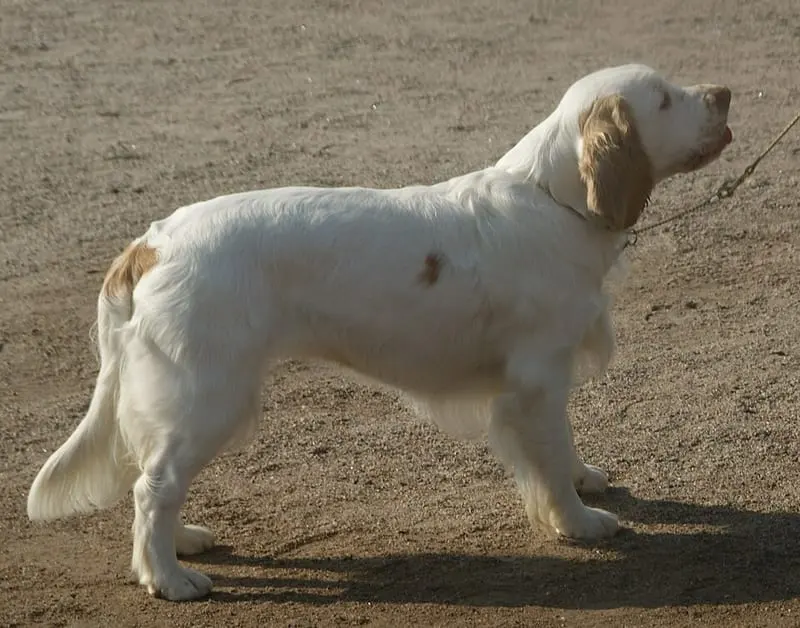

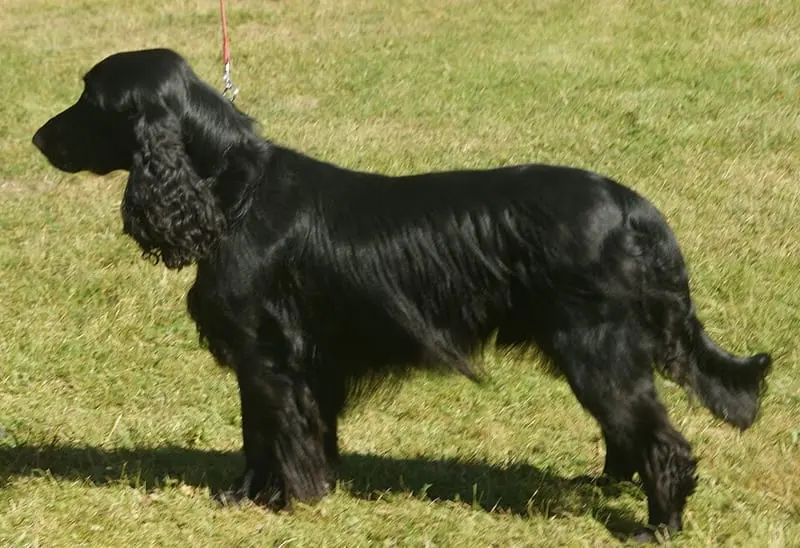

| Clumber Spaniel | Field Spaniel | |
|---|---|---|
| FCI group | 8. Retrievers, flushing dogs and water dogs | 8. Retrievers, flushing dogs and water dogs |
| Country of origin | United Kingdom | United Kingdom |
| Weight | 25–34 kg | 18–25 kg |
| Recognition features |
|
|
| Coat | Abundant, close, silky and straight coat with well-feathered legs and chest. Plain white body with or without lemon markings; orange markings permissible, as are slight head markings and a freckled muzzle. Any other colour is unacceptable. | Long, flat, glossy and silky, never curly, short or wiry; dense and weatherproof, with abundant feathering on chest, underbody and behind legs but clean from hock to ground. Colours: black, black and tan, blue roan, blue roan and tan, liver, liver and tan, liver roan, liver roan and tan. |
| Purpose | A flushing dog working at a more leisurely pace than other spaniels; a silent worker with an excellent nose. | A flushing and retrieving dog, suited to rough shooting and as a companion for the country dweller; not suitable for the city. |
Breed page: Clumber Spaniel · Breed page: Field Spaniel
Learn to recognise this breed and many more
In the Dogtice quiz you practise breeds on photos and see the differences between look-alike breeds.
Try the demo quizComing soon to Google Play
The information is indicative. Texts are based on available sources and may contain inaccuracies; for binding details (e.g. for breeding or shows) use the official breed standard.