
Comparison: Romagna Water Dog and Spanish Water Dog
Romagna Water Dog and Spanish Water Dog are marked as similar in our database. The table compares only the data we have on the breeds.
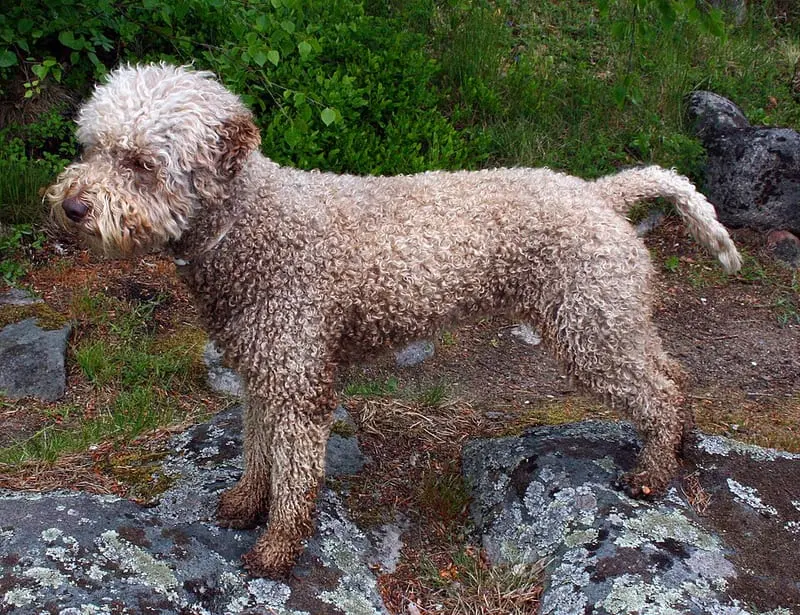

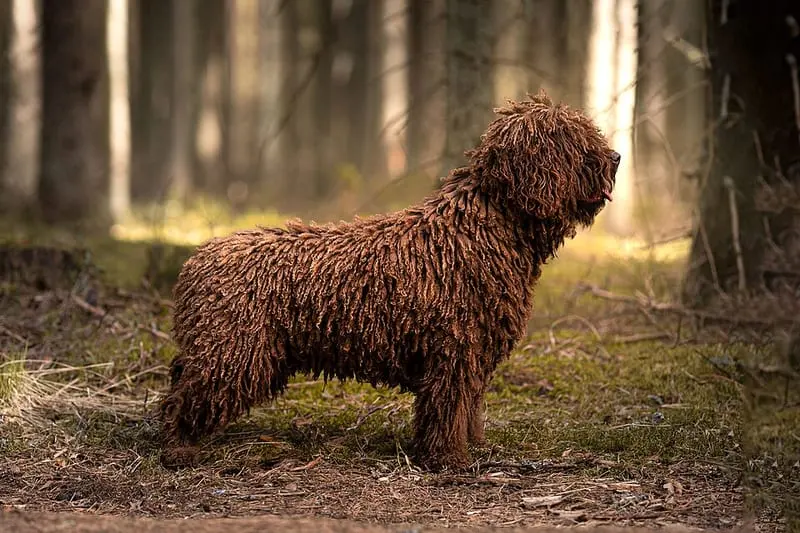

| Romagna Water Dog | Spanish Water Dog | |
|---|---|---|
| FCI group | 8. Retrievers, flushing dogs and water dogs | 8. Retrievers, flushing dogs and water dogs |
| Country of origin | Italy | Spain |
| Category | Medium | Medium |
| Height at withers | 41–48 cm | 40–50 cm |
| Weight | 11–16 kg | 14–22 kg |
| Recognition features |
|
|
| Coat | Woolly, semi-rough textured coat of tight ring curls with visible undercoat, waterproof; felted hair must be removed periodically and the clipped coat must not exceed two to three centimetres. Off-white solid, white with brown or orange patches, orange or brown roan, brown in various shades, or orange; some dogs have a brown mask and tan markings are allowed. | Always curly and woolly; curly when short, may form cords when long. Complete even clipping is accepted. Colours: solid (white, black, chestnut in their shades) or bicoloured (white and black or white and brown); tricolours and black and tan or hazelnut and tan are not admitted. |
| Purpose | Originally a retrieving water dog of the marshlands of Comacchio and Ravenna, today primarily a truffle-searching dog. | Used as a shepherd dog, hunting dog and assistant to the fisherman. |
Breed page: Romagna Water Dog · Breed page: Spanish Water Dog
Learn to recognise this breed and many more
In the Dogtice quiz you practise breeds on photos and see the differences between look-alike breeds.
Try the demo quizComing soon to Google Play
The information is indicative. Texts are based on available sources and may contain inaccuracies; for binding details (e.g. for breeding or shows) use the official breed standard.